"Hell Cats And She Ghosts": Part Two
Part Two runs from the book's printed page 14 through page 24: two reprinted newspaper clippings sharing a single page, seven pages of "Favorite Photos," a mining-accident story, two shorter stories, a poem, and the closing essay, "Here's Laughing at You!" This site's own part division is noted in the book's introduction on the main page for "Hell Cats And She Ghosts."
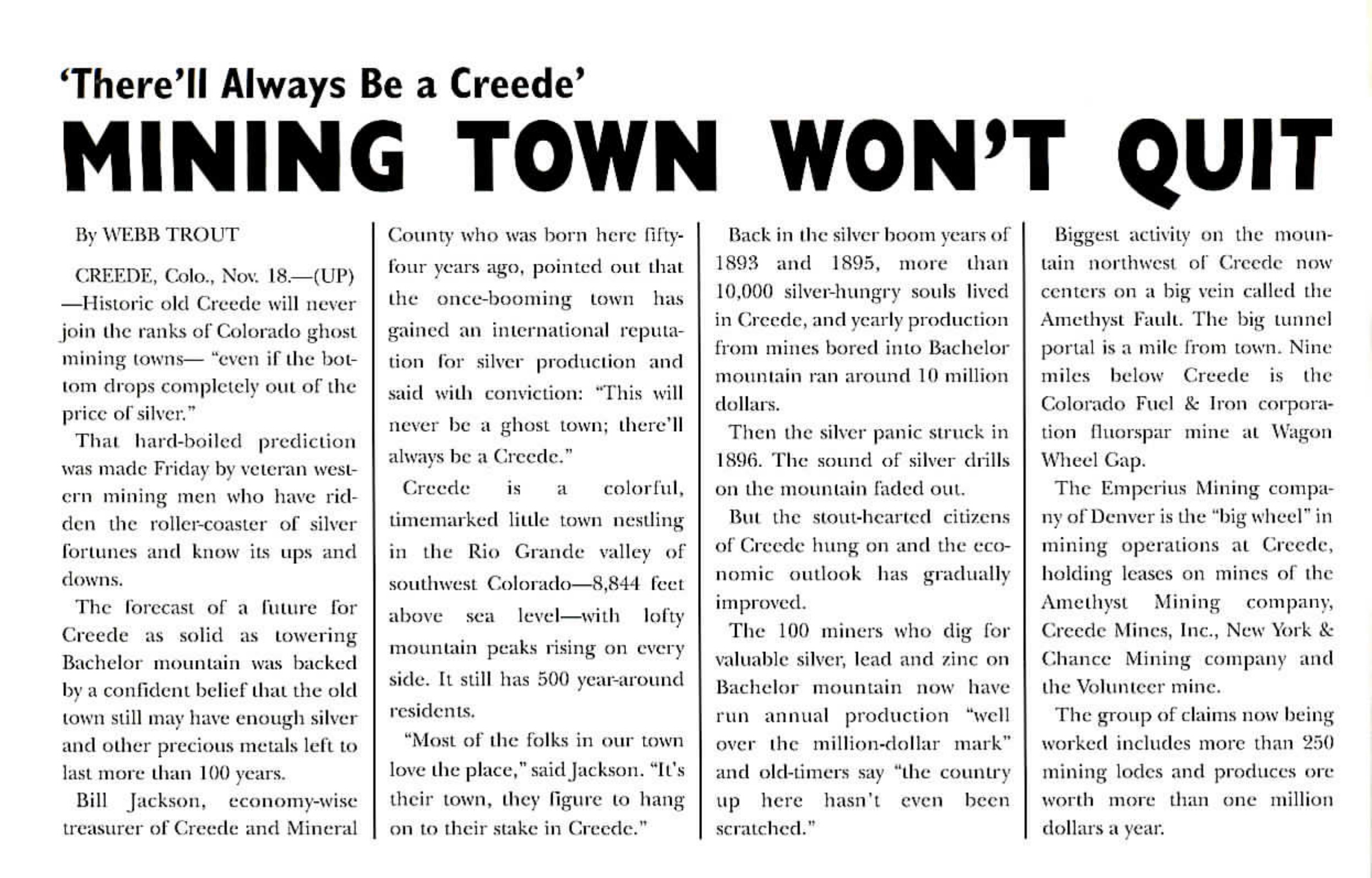
Mining Town Won't Quit
By WEBB TROUT
CREEDE, Colo., Nov. 18.–(UP) – Historic old Creede will never join the ranks of Colorado ghost mining towns– "even if the bottom drops completely out of the price of silver."
That hard-boiled prediction was made Friday by veteran western mining men who have ridden the roller-coaster of silver fortunes and know its ups and downs.
The forecast of a future for Creede as solid as towering Bachelor mountain was backed by a confident belief that the old town still may have enough silver and other precious metals left to last more than 100 years.
Bill Jackson, economy-wise treasurer of Creede and Mineral County who was born here fifty-four years ago, pointed out that the once-booming town has gained an international reputation for silver production and said with conviction: "This will never be a ghost town; there'll always be a Creede."
Creede is a colorful, timemarked little town nestling in the Rio Grande valley of southwest Colorado–8,844 feet above sea level–with lofty mountain peaks rising on every side. It still has 500 year-around residents.
"Most of the folks in our town love the place," said Jackson. "It's their town, they figure to hang on to their stake in Creede."
Back in the silver boom years of 1893 and 1895, more than 10,000 silver-hungry souls lived in Creede, and yearly production from mines bored into Bachelor mountain ran around 10 million dollars.
Then the silver panic struck in 1896. The sound of silver drills on the mountain faded out.
But the stout-hearted citizens of Creede hung on and the economic outlook has gradually improved.
The 100 miners who dig for valuable silver, lead and zinc on Bachelor mountain now have run annual production "well over the million-dollar mark" and old-timers say "the country up here hasn't even been scratched."
Biggest activity on the mountain northwest of Creede now centers on a big vein called the Amethyst Fault. The big tunnel portal is a mile from town. Nine miles below Creede is the Colorado Fuel & Iron corporation fluorspar mine at Wagon Wheel Gap.
The Emperius Mining company of Denver is the "big wheel" in mining operations at Creede, holding leases on mines of the Amethyst Mining company, Creede Mines, Inc., New York & Chance Mining company and the Volunteer mine.
The group of claims now being worked includes more than 250 mining lodes and produces ore worth more than one million dollars a year.
Printed page 14. A wire service (UP) reprint; no source newspaper or year is given on the page, only the "Nov. 18" dateline. Bill Jackson, treasurer of Creede and Mineral County and quoted here, is John's father, William T. "Billy" Jackson Sr.
"Believe It Or Not!" by Ripley
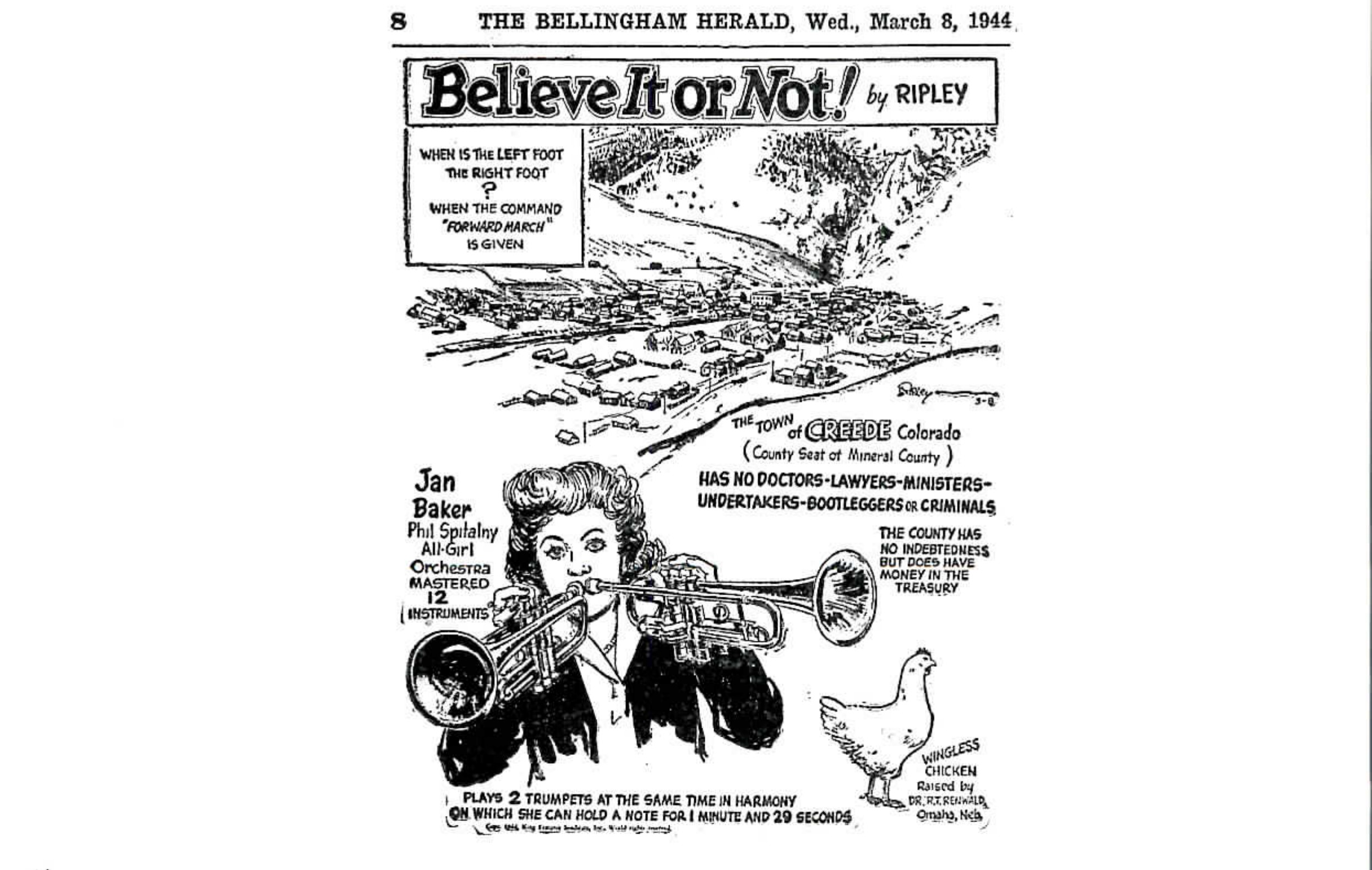
The clipping is headed "8 THE BELLINGHAM HERALD, Wed., March 8, 1944" above the "Believe It or Not! by RIPLEY" masthead, and combines three unrelated curiosities in one panel. The one concerning Creede reads, over a drawing of the town: "THE TOWN of CREEDE Colorado (County Seat of Mineral County) HAS NO DOCTORS-LAWYERS-MINISTERS-UNDERTAKERS-BOOTLEGGERS OR CRIMINALS. THE COUNTY HAS NO INDEBTEDNESS BUT DOES HAVE MONEY IN THE TREASURY." The other two items on the same panel, a riddle about a marching foot and a note on a trumpet-playing orchestra member paired with a wingless chicken raised in Omaha, Nebraska, have nothing to do with Creede and are not transcribed further here.
Printed page 14, sharing the page with "Mining Town Won't Quit" above. "Curiodditie s," later in this part, refers back to this clipping: "Creede made Ripley's 'Believe It Or Not' in 1944 as you have noted."
Favorite Photos
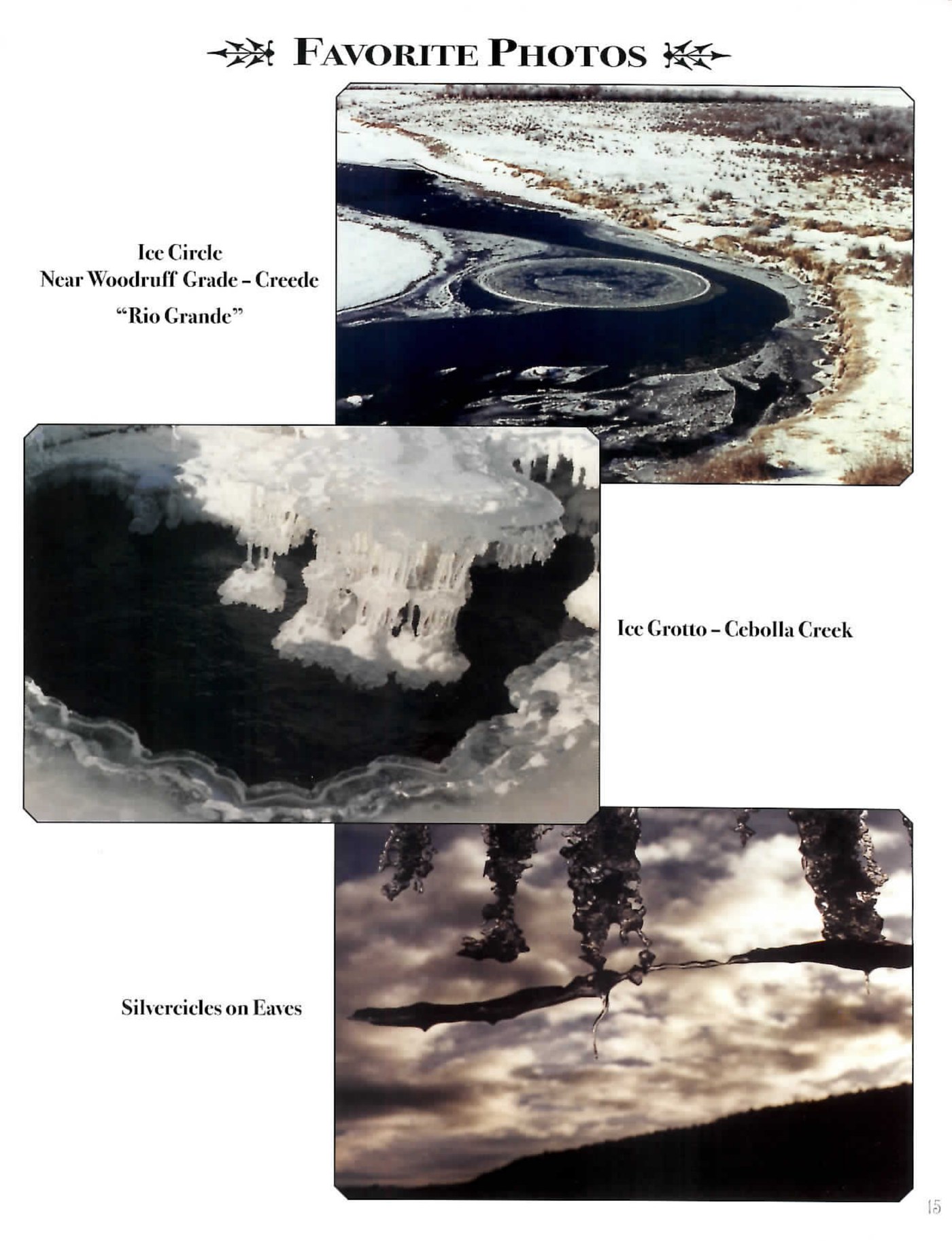
Printed page 15, an unnumbered page of photographs with no story text. Reproduced here as a single composite image so the original layout and captions stay together, as with the other six "Favorite Photos" pages in this part.
Favorite Photos
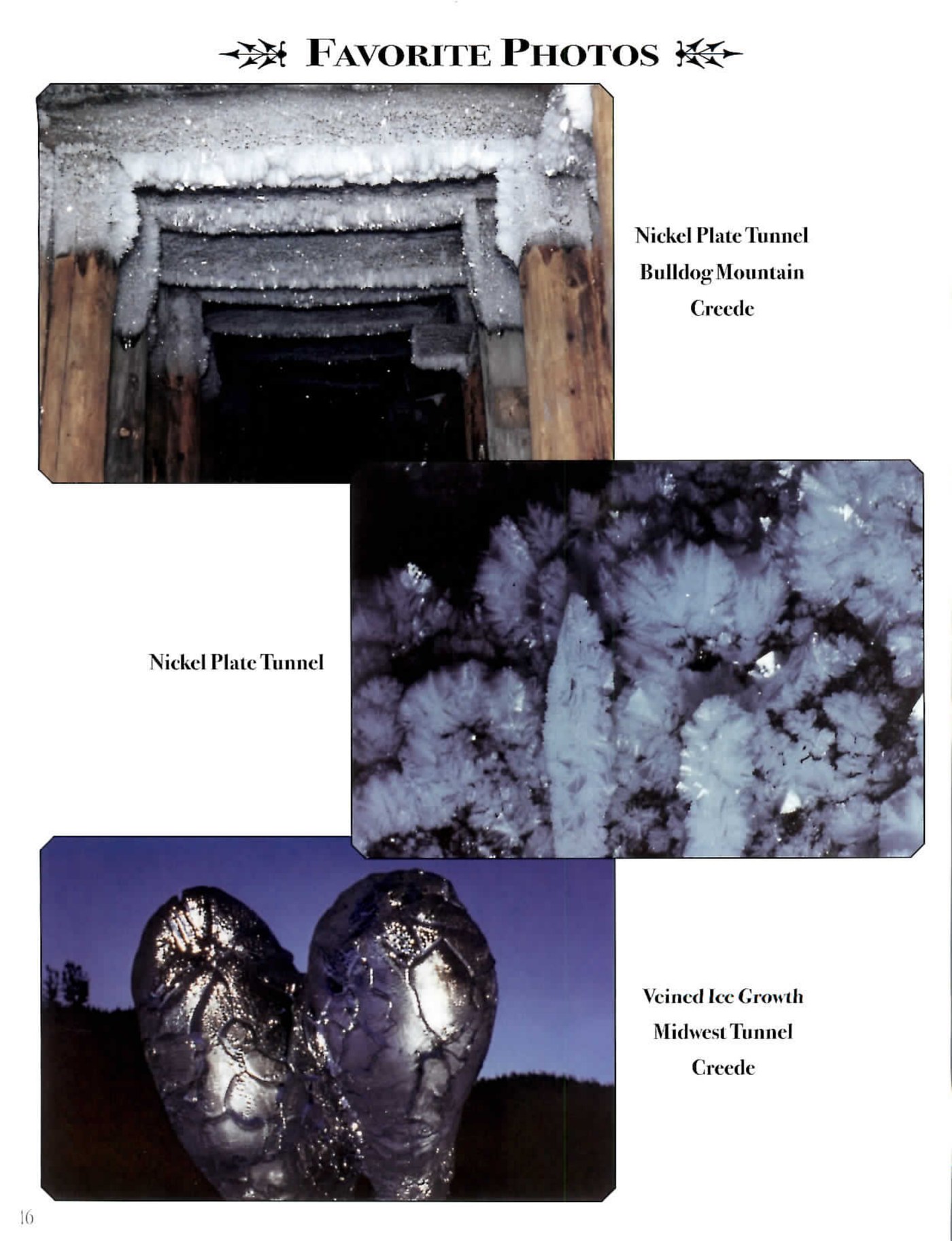
Printed page 16, an unnumbered page of photographs with no story text. Reproduced here as a single composite image.
Favorite Photos
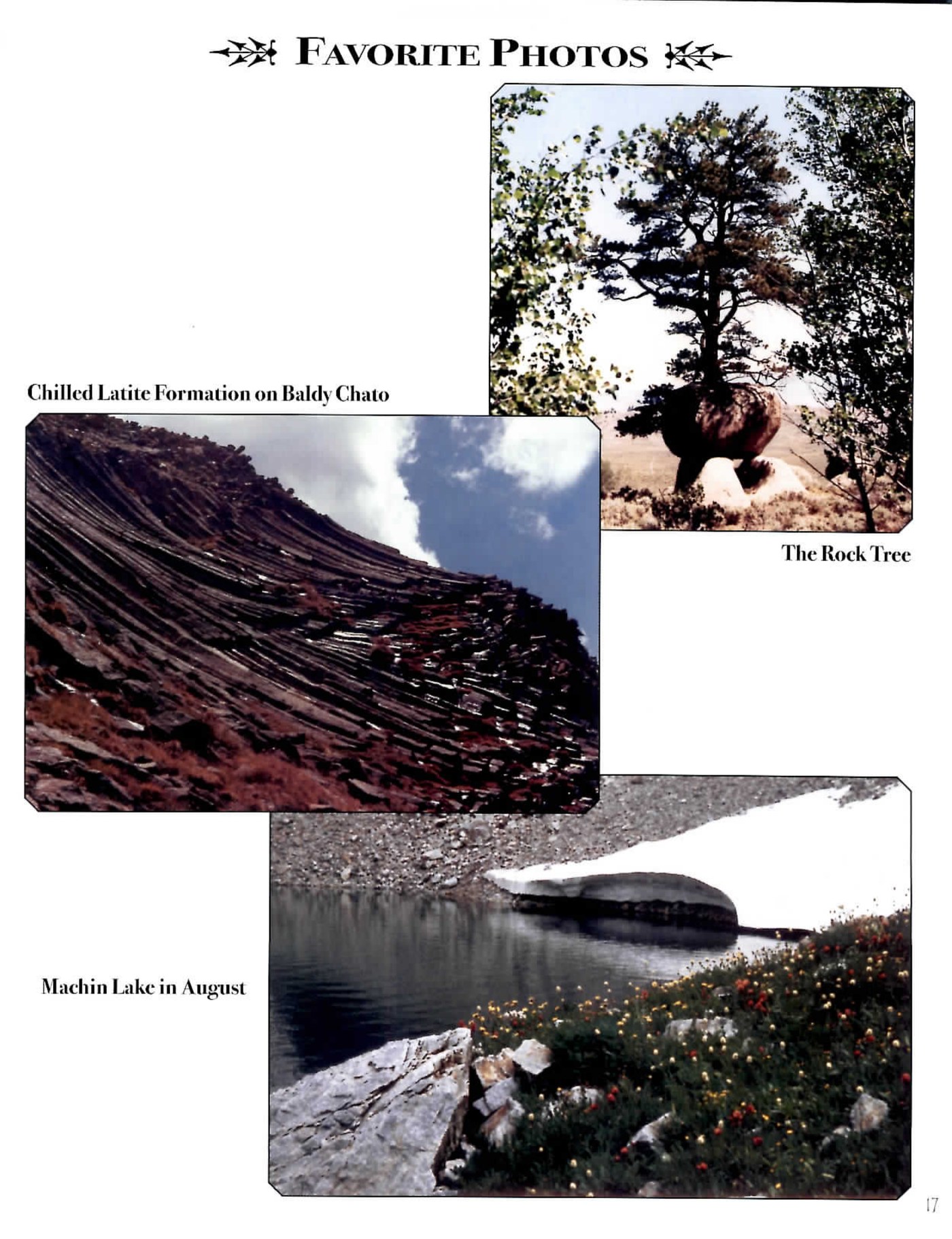
Printed page 17, an unnumbered page of photographs with no story text. Reproduced here as a single composite image.
Favorite Photos
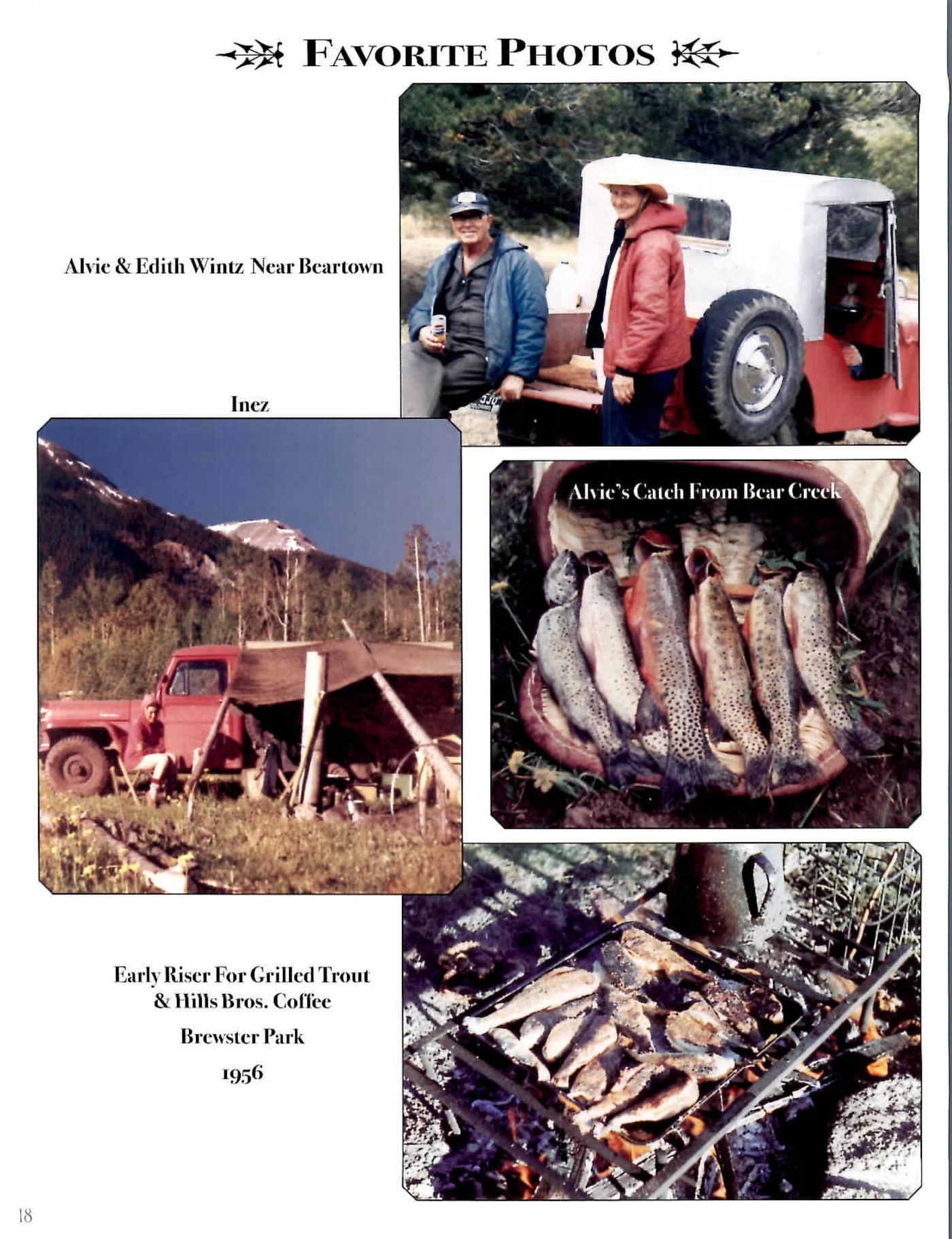
Printed page 18, an unnumbered page of photographs with no story text. Reproduced here as a single composite image. Woody Wintz appears in "Hell Cats" in Part One; Alvie and Edith Wintz are not otherwise identified here.
Favorite Photos
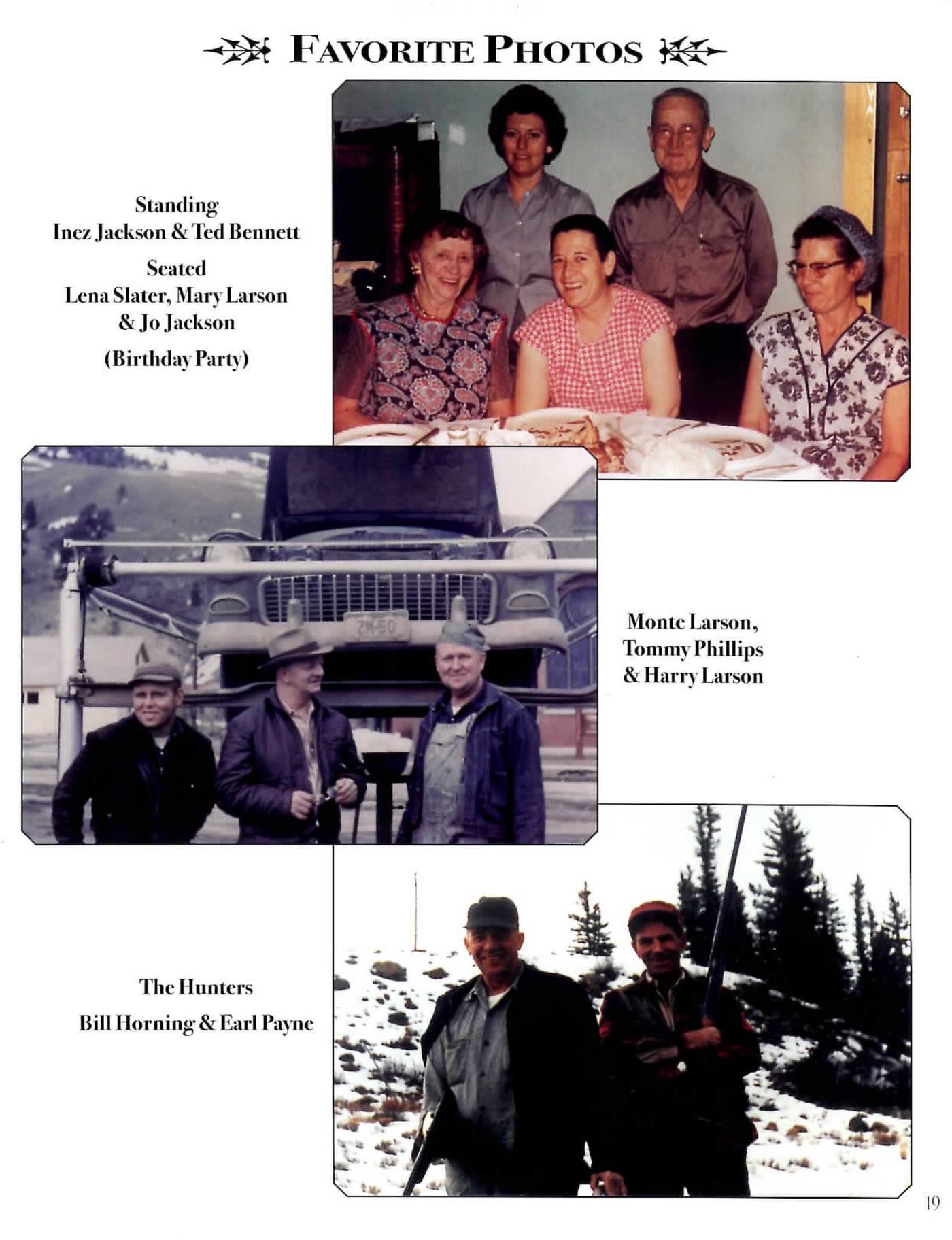
Printed page 19, an unnumbered page of photographs with no story text. Reproduced here as a single composite image. Inez Jackson is John's wife, Inez Schriver Jackson; the "Jo Jackson" seated in this photograph is not identified further and is not necessarily "Mom Jo," John's mother, who appears elsewhere in the book.
Favorite Photos
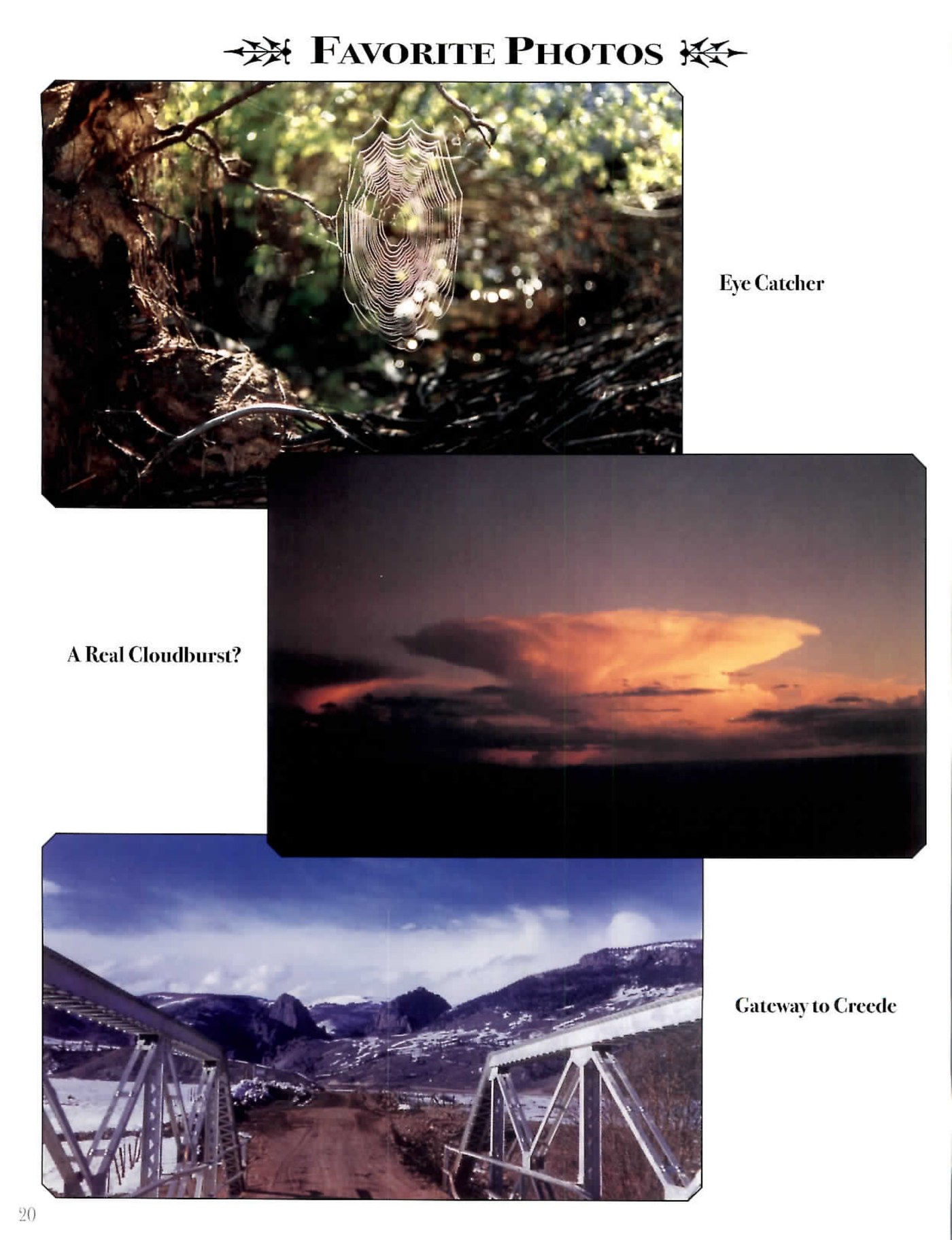
Printed page 20, an unnumbered page of photographs with no story text. Reproduced here as a single composite image.
Favorite Photos
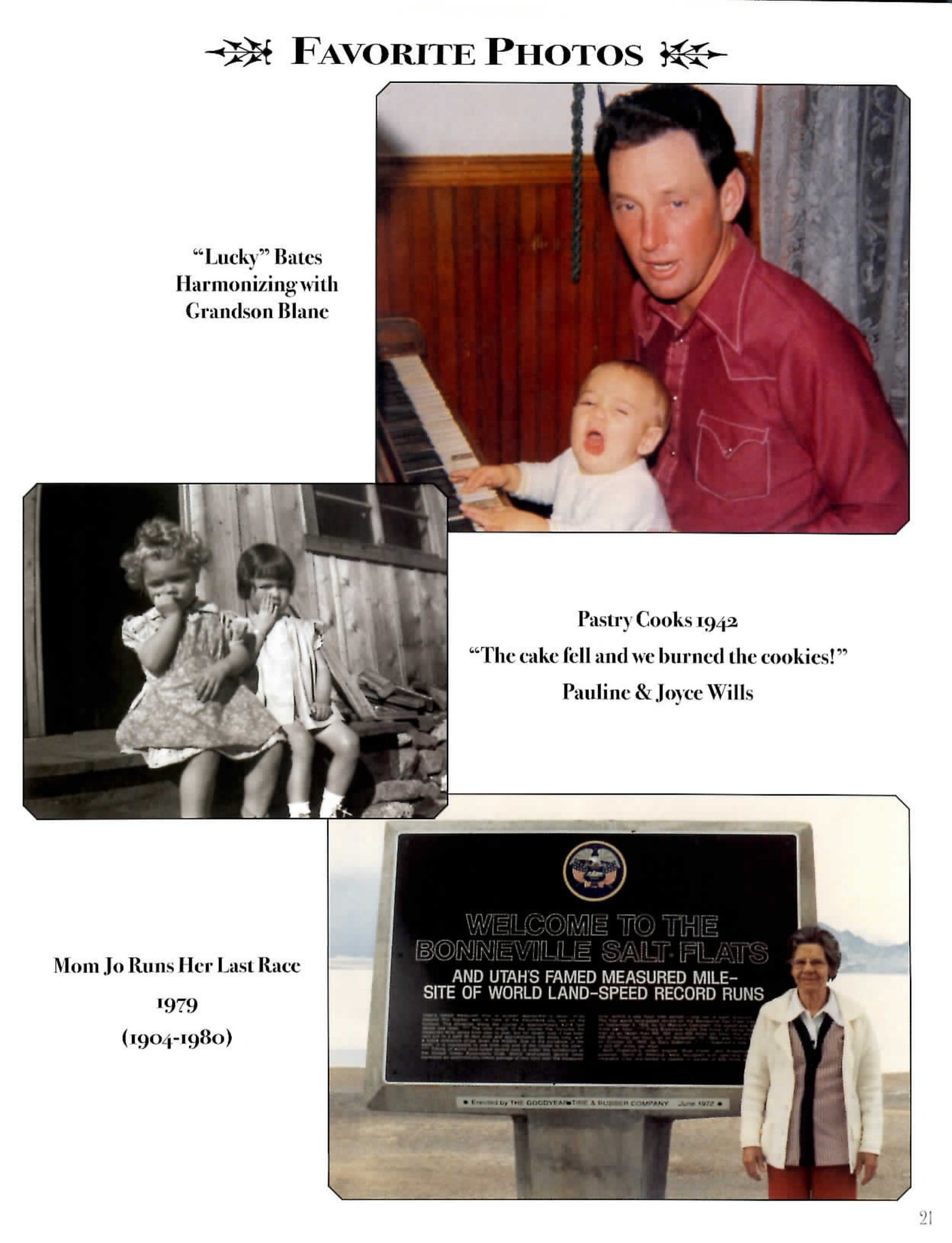
Printed page 21, an unnumbered page of photographs with no story text. Reproduced here as a single composite image. "Mom Jo" is Josephine Jackson, John's mother, giving her dates as 1904–1980; Pauline Jackson Bates is John's sister, and "'Lucky' Bates" and grandson Blane are her family, shown elsewhere on this site with the family's own consent.
Looking The Devil Right In The Eye
In the year 1949 my father realized a lifelong dream by leasing the Phoenix lode mining claim on East Willow Creek from the Moffat Estate Company of Denver. He had known one of the discoverers who had advised him of its potential since it was on the strike of the Solomon/Holy Moses fault. Our operation was very low budget with a lot of begging, borrowing and stealing of supplies.
The first year was a total failure for J. & S. Mining Company but acquainted us with James Muir, Jr. of California and a nephew by marriage of our own Noel "Snuffy" Oates who had a mine on West Willow Creek. Mr. Muir assured us he could get operating capital if we formed a limited partnership in which he would have an interest. He proved to be an able promoter and from this meeting Outlet Mining Company emerged and we leased equipment from John Hamm who had just closed his Crystal Hill mine, a gold venture near Saguache. With this shot in the arm I retimbered the original discovery shaft as far as possible as my brother Scooter and Gavin Skinner tried to drive around a highly altered area in a tunnel I had driven the previous year. This, too, was unsuccessful and we concentrated our efforts on the shaft which we were able to finish cleaning out and retimbering to the floor (82') by July of 1951.
Assays were encouraging at this depth and energized us into a sinking operation with Gavin on the hoist and Scooter and I in the shaft. As we neared 150' in depth with an average of 2 1/2 feet advance per day it became routine to sink 20' then timber to within 6' of the floor. This meant that, at times, the ladder was 20' or more above us and we had to use the shaft bucket to raise and lower us. The steel airline was our only signaling device to surface with raps on the pipe in proper code to alert Gavin of our needs.
This was a disaster in the making, but when you are young and foolhardy risks make the subjects of barroom talk. On one particular day we had drilled out the floor with a jack-hammer and loaded the holes with approximately 30 pounds of Gelex dynamite in 15 holes of 3 feet depth. Gavin had hoisted the drill and hoses to surface and returned the bucket to a position above us waiting for our blasting signal to first lower it where we would crawl in it after igniting the fuses to be hoisted to safety.
I boosted Scooter to a timber where he could then raise himself high enough to signal. I timed the holes by cutting off lesser lengths, notched the ends of the fuse for easy lighting with a carbide lamp and told him to rap the pipe hard, get the bucket headed down and to stop it just above the floor where I could crawl on after lighting (spitting in miner's slang) 15 separate fuse ends. We had never had a problem before and when Scooter rapped the pipe twice I felt safe enough to start spitting. We were wet, muddy and anxious to get out of the hole and into warm sunshine. The Vee cut came first then, in sequence, to two closely spaced holes in the far end to throw muck outward creating a pocket for the shaft bucket when we began mucking again. The bucket didn't move. Scooter signaled again, harder, and again no movement. I tried climbing with my hands braced against the hanging wall and my feet pushing against the footwall hoping to get high enough for Scooter to grab me. I fell back twice and in panic began slashing at the fuse with my knife. Hot tar was sticking to my fingers and I knew the fuse had burned into the hole and time was fast running out. The smoke was so thick I couldn't see the bottom of the bucket but I could hear Scooter rapping the pipe in a frenzy.
After Gavin had dropped the bucket to where it now rested he began shoveling the day's hoisting out of the way for the next day's production. With the roar of the compressor and being over the edge of the dump he couldn't hear the signals. Fate intervenes at such times. My wife, Inez, had picked up Mom Jo to make a surprise visit to our workings in an old Chevy truck, Gavin saw them approaching and went up to see who it was. As he stood the shovel against shaft timbers he heard the frantic pings on the pipe and lowered the bucket. Scooter and I were choking in the acrid smoke when he sensed the bucket moving and yelled to climb on it when it hit the floor and he would give "emergency up" signals. We were less than 30 feet from the floor when the first blast lifted us and rocks spanged off the metal bucket. More deafening concussions followed with less and less impact until we were out of the smoke and could see daylight above us.
It was a terrifying experience for all due to my impatience. Scooter could have climbed the ladder to safety and it took a mountain of nerve for him to stay at his post and keep signaling. He was a veteran of Pacific Ocean beachheads with the U.S. Marine Corps in World War II so his valor came naturally.
Printed page 22. A near-fatal 1949–1951 mining accident at the Phoenix claim on East Willow Creek; John's brother "Scooter" is William "Scooter" Jackson, seen elsewhere on this site, and his wife Inez and mother "Mom Jo" (Josephine Jackson) also appear. Mr. Muir, "Snuffy" Oates, John Hamm, and Gavin Skinner are not otherwise identified beyond what is given here.
Short and Shorter
I firmly believe that every youth should spend at least three months in the military to learn discipline and respect and no less than ten years married to a female to learn humility. My wife tells me that girls turn into young ladies with those attributes and more by a system of osmosis denied to boys and therefore it is their duty to train males. Having been in the military and married for fifty years I feel qualified to advise that military duty is a less painful learning period.
The only way I can keep some semblance of equilibrium in our relationship is to threaten to bring one of the water snakes that roam our yard in the summer into the house and turn it loose.
In the year 1953 my brother, Joel, made one of his infrequent visits to Creede from his Postal duties in Fort Collins to join me in prospecting and fishing. We combined the two in an excursion to Deep Creek and Snowshoe Mountain where we could catch a few pan-sized brook trout and scout prospect holes on the center ridge of the mountain. My wife, Inez, loves to fish and accompanied us to fish where the canyons forked as Joel and I headed up the trail of the west fork.
We first visited the prospect holes and found nothing more interesting than buttons of magnetite on altered latite so headed back to the creek to fish on the way back. We each had around six plump trout and decided that was enough for the evening meal as we skirted a beaver pond. We scared a hawk into flight that had been starting to rip open a water snake it had caught and Joel draped the snake over his creel for no good reason as we walked on to the pickup where Inez was curled up on the seat with both windows halfway down sleeping soundly. We were going to dress our fish by the creek some 50 yards from the truck and Joel hung his prize over the window nearest my napping bride. We were making small talk as I slit the fish open and Joel cleaned them of entrails and blood when an unearthly scream resounded from the direction of the pickup then another even louder as Inez exited the truck and began backing up the hill.
We laughed. We laughed loudly and Joel was rolling on the ground pointing so I wouldn't miss any of her act which was the second mistake he made that day. Inez rode in the back on the way home and didn't speak to either of us that night nor to brother Joel for the remainder of his visit.
Printed page 22, following "Looking The Devil Right In The Eye" on the same printed page. John's brother Joel Jackson and wife Inez both appear; the water snake is not harmed in the telling.
Conscience
They tell me if I don't believe I have no hope to e'er receive
the gift of absolution
But in my mind, as I perceive, to weigh the guilt and not deceive
I, alone, make restitution
For my sins and fabrications, revelry and altercations
my mind and soul pollution
It was mine to pick and choose, it was mine to grasp and lose
in moral destitution.
In remorse for my behavior should I cry out for a Saviour
nay, I beg for dissolution
To regroup for life's next journey, to make first team in the tourney
and shine in my ablution
I enbrace re-incarnation as true spiritual salvation
I see it not as revolution
But belief in higher being, omnipotent and all seeing
rebirth, a natural solution
Printed page 23, set as a single page on a mottled gold background with no other text. "Enbrace" for "embrace" is printed as shown. No note in the text on the occasion or date of writing.
"Here's Laughing at You!"

We live in the richest nation on Earth, the most powerful nation on Earth and we enjoy every convenience available to man yet we are embroiled in controversy from coast to coast. The American Civil Liberties Union is ready to pounce on anyone daring to be "politically incorrect". Claims lawyers outnumber medical practitioners and are raring to make you wealthy through litigation if you get whip lash from your fast rise recliner.
Our brains are programmed to record the most tragic events in our lives to remind us how fragile life is but they are also programmed to record the most humorous and happy times in our lives to help cope with tragedy. In our quest to make every child a scholar and leader in a society of political correctness, from the playground to the oval office, we have forgotten how to laugh at ourselves. This, in itself, is a tragedy because humor is needed to balance our mood swings.
I was an average student who became a helluva good laborer in a politically incorrect era. I was associated with every faith and race in childhood, the military and during my productive years. We made fun of each other, we laughed at each other and we fought for each other. It strengthened us –physically and spiritually–to find that particular niche where our talents could be best utilized.
Laugh at yourself, laugh at your neighbor and laugh at the simpletons telling us how wrong we are, we all deserve it and it restores a little sanity in our lives. Let the others be politically correct. Call me anything that comes to mind and laugh at me. I might bloody your nose but I promise you I won't sue.
Printed page 24, the book's closing essay. Phil Bethke is not otherwise identified. This is the last page of the book; there is no colophon or closing date.