Summary
By John Richard Jackson, writing as "Thundermug"
The closing section of John's 1993 book "Once Around the Thunder Mug," reproduced exactly as he wrote it. See the book's front matter for the full note on how this text is transcribed.
Summary
If you are still with us we apologize for this portion running on so long, we just got carried away with the first effort. We want to assure you Part II will be an improvement in both quality and scope if the typewriter ribbon holds up.
In the late '30's, the increasing demand for silver, and base metals rejuvenated the town of Creede and prompted investors to get in on the ground floor in new exploration of the hanging wall of the Amethyst fault. New faces were appearing daily on the streets looking for work, any work. These weary people were the dust-bowlers, mainly farmers who had lost everything in the unending dust blizzards that turned day into night and destroyed their crops. They were hard workers who wanted only food and shelter for their families. The hard rock silver mines offered jobs but were a 180 degree turn-around from their former lives. They adapted well, became excellent miners and solid members of the community.
The sounds of war were growing ever closer and the bombing of Pearl Harbor on December 7, 1941, would drastically change the fabric of this isolated mining community. Creede's depression children would be scattered from Burma to Italy; from Kiska and Attu islands in the Aleutian chain to Tulagi and Guadalcanal in the Solomon islands of the South Pacific. Some would not return from battle; others would find better jobs than mining in warmer climates than the 9000 feet elevation of Creede.
Our somewhat primitive educational facilities, off-set by wonderful, dedicated teachers, turned out leaders for both war and peace. We can't praise the '20's and '30's educators enough. They sacrificed personal gain and convenience to give a ragtag group of children the best possible start in life. In keen rapport with the school board they taught the subjects that would best prepare us for the future with salaries ranging from $90 to less than $160 per month. They had the blessing from parents and school board to administer corporal punishment, vitally needed to steer us in the right direction.
They taught us the meaning of pride and respect and we learned that a well organized community functions best with a caste system; not because some people are better than others but because some people strive harder than others and make up the cadre that organize and perform civic duties that benefit the entire community.
The '20's and '30's were a harsh period for parents. They coped, somehow, to keep food on the tables and clothes on the children with very little money and, best of all, they were there for us; they had time for us and they gave us enough lead rope to get our lumps in the real world. They knew that experience is the best teacher. Our memories are real treasures and our vault is well filled from our youth in Creede, Colorado.
About the Author
The book's back cover, closing where the front cover opened it:
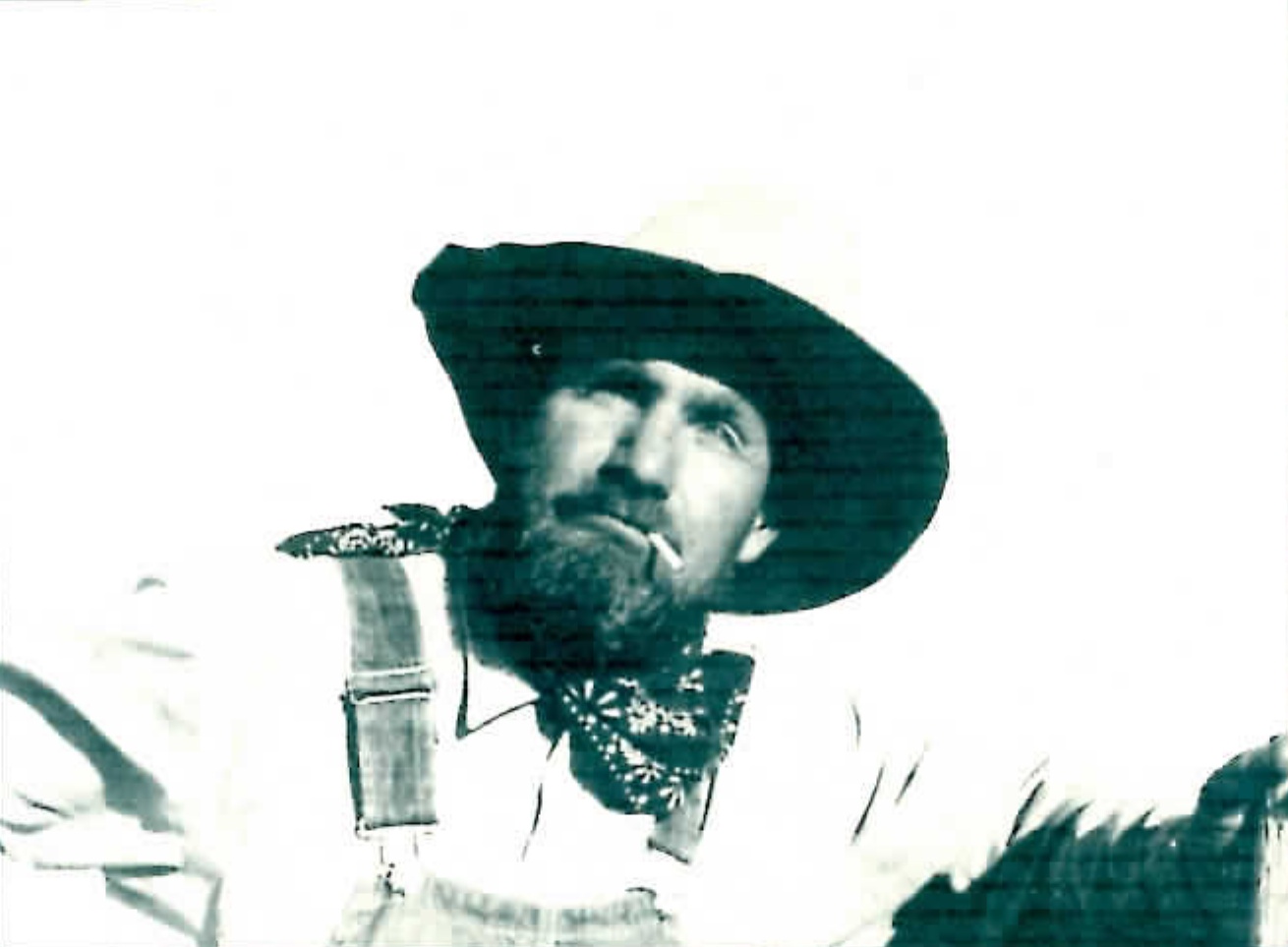
John Richard Jackson had a rewarding 27 years "in the hole." He began work as a mucker operating a #6 square point shovel for which he was both physically and mentally qualified. He rose in rank to become both manager and independent operator of several small hard rock mines, positions for which he was eminently unqualified and he promptly went broke; several times. The last 13 years of his working career were spent with Freeport Exploration Company prospecting for precious metals where the tools were advanced geology and geophysics, a far cry from his first shift in the mines of Creede. He retired in 1989 and now lives on a small ranch in Hinsdale County with his wife, Inez, and their Siberian Husky, Skeeter.
Written in the third person, as back-cover author notes are, but almost certainly in John's own words. "Now lives" reflects the book's 1993 printing; see John's own page for what became of him afterward.