"Once Around the Thunder Mug"
By John Richard Jackson, writing as "Thundermug"
John Richard Jackson wrote a weekly column for the local newspaper called "Once Around the Thundermug." In 1993, in response to popular request, he collected the columns into his first self-published book of the same name, printed by B&B Printing of Gunnison, Colorado. It went out of print years ago and does not appear in WorldCat, Google Books, or the Internet Archive — as far as can be determined, the copies in the family's own hands are among the only ones left. It is reproduced here, in sections, exactly as John wrote it, with his sister's blessing as his sole heir.
What follows is reproduced in John's own words, exactly as he wrote them — nothing edited, softened, or left out. It carries the same broad, joking, tall-tale narrator he uses throughout "Please Go to Hell," playing up a folksy small-town-goofball persona that was a deliberate comic choice, not a reflection of how he actually wrote or spoke. Where a spelling or spacing slip appears below, it is almost certainly an artifact of scanning and optical character recognition on the original printed book, not an error of John's.
John signed his newspaper column and this and several later self-published books with the pen name "Thundermug."
Contents
The book's own front matter — Origin of Title, Foreword, Acknowledgments, and Introduction — in full below:
The book's three chapters and closing summary, added as they're transcribed:
- Chapter I: From the Womb to the Real World
- Chapter II: Of Bagpipes, Coasting and Firemen
- Chapter III: Higher Learning and Other Diversions
- Summary
Hold 'er steady and swing 'er true
change your steel and follow through
Now back 'er up, she's startin' tuh roll
yuh can't tamp powder in a three cornered hole
That dutchman's gone now turn 'er slow
three steel down, only two to go
More water, Pappy, she's turnin' hard
that's just right and I thank you Pard
We'll finish this hole and find a crew
that's been around the thundermug a time or two

Origin of Title
The author began mining in tunnels and shafts near Creede, Colorado at the age of 17. He didn't become a miner for several years after his introduction to this world of darkness and danger. To earn the title "miner" a fellow had to operate every tool used in hard rock mining from pick and shovel to the latest pneumatic drills. He had to be able to timber well for squareset drifts or stull the length of open stopes. Above all, he had to know exactly how to place his drill holes to pull the ground and he never endangered a fellow miner.
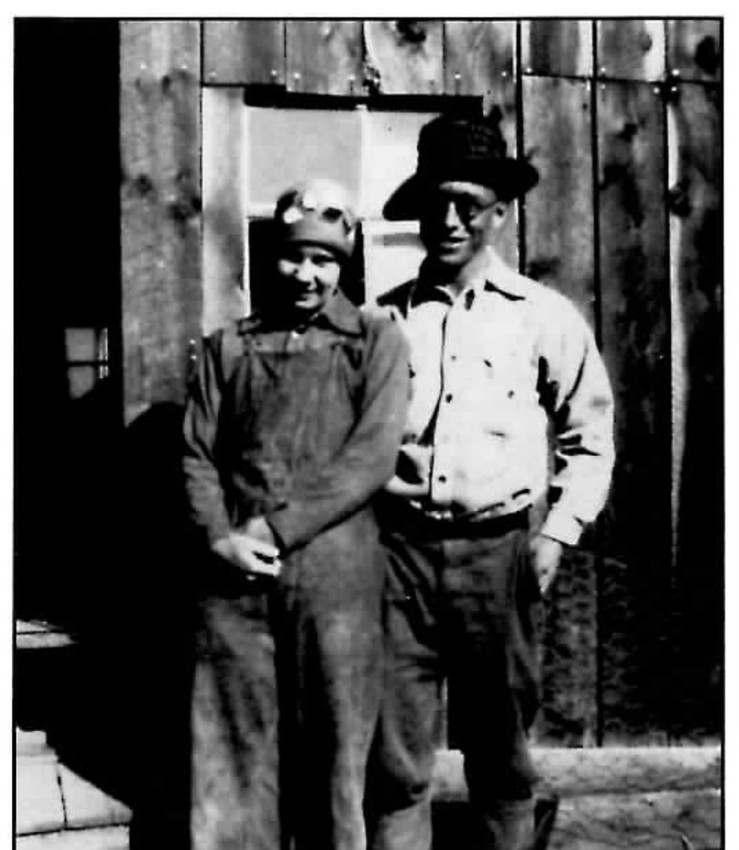
Creede miners, because of their versatility, could find work in any camp. Several had worked in South America and a few had worked in the tungsten mines of Korea. That elite group were the real tramp miners.* The author received his black hole baptism early enough to learn from the "real tramp miners" and join the second generation who tramped from Butte to Bisbee.
I was driving a drift (tunnel on a vein) in the Amethyst Mine and encountered loose ground. Rather than have me stop and timber the area with the loss of 25 tons production daily the foreman moved Henry "Hank" Slaght from a lower level to frame and place the square sets needed for safe passage. Hank was the epitome of a tramp miner. He could rattle off the names of holes from Grass Valley to Picher and Couer De Alene to Tucson with the names of the shifters thrown in.
It took Hank three days to complete the job. He was picking up his tools when I walked back to let him know I had tamped out* and was ready to light the ends of 21 separate safety fuse, timed and split.
I looked over the tight fit of daps between caps and posts and the close lagging that insured no rocks would fall through. Hank was sitting, smoking, as I complimented him on his work. He took a puff, blew smoke out his nostrils and stated, matter of factly, "Well Jack, I've been around the pisspot a time or two."
We dressed it up a little but "Once Around the Thundermug" is in tribute to all who earned the titles "miner" and "tramp miner."
* "Tramp Miners" — Nomadic, usually single men, who traveled from one mine to another
* "Tamped out" — packed (or loaded) drill holes with explosives
Foreword
Real stories usually begin with a page or two about the author written by a relative or close friend consisting of a brief biographical sketch followed by a pack of lies. This is not a real story. It is an accumulation of truths and half truths that has cluttered up notebooks and desks for over a half century and has arrived at the point where we either have to put it in book form or burn the house down.
We will skip the author's history and go on to acknowledgments or the beer will get warm. Acknowledgments, as the reader is aware, are credits to others for encouraging the author to go bankrupt publishing tripe better left cluttering up notebooks and desks. Credits often range from the author's Mother to the fourth president of the United States.
An old and trusted friend who lives in Denver by necessity and by choice at La Garita Ranch near Creede asked me a score of years ago to put these stories in some semblance of order and present them to a publisher. It is only right and proper that Allan R. Phipps receive the first credit, or demerit as the case may be, as his suggestion came when we were well snockered and the spirits of the occasion had more than passing interest in that suggestion taking root. Allan is a lawyer which makes for fine company when flirting with libel. I will not intentionally libel or defame anyone when sober. We shall plead temporary insanity when snockered.
There are many others to share the blame in this conspiracy. An equally old and trusted friend who is not a lawyer but drinks as well as a barrister has goaded me for no less years to make a damned fool of myself. Charles Steele is a writer of real stories who I believe will publish his own if I am not hung, drawn and quartered in this attempt. The rest will be listed in no order either alphabetically or by influence. Suffice to say they are beautiful and wonderful persons who can drink in any company, laugh honestly and easily and believe, as I do, that the Lord makes each of his children unique in one form or other. Whether weak or strong, dullard or genius, timid or brash we accept each unto the other with utmost compassion and understanding. That spirit is to endure so long as one of our number does not drink another under the table. In that event we shall be obliged to forget the bylaws and thrash the hell out of the offender.
It is our hope that in reading of the growing pains of a small mining community and the characters involved you will be able to relate to a part or parts that made every day a world of adventure for young minds struggling with the complexities of life in a hostile environment. Above all we want those dear souls remembered who kept the flame of hope aglow and directed us along the path of righteousness until we were physically and mentally prepared to go to hell of our own volition.
We will even give credit to those offering encouragement whose ulterior motive concerns the wish that someone will be sufficiently offended to nail my privates to a stump and push me over backward. Those relatives who will offer hammer, nails and a durable stump for such action will not be listed in acknowledgments.
Acknowledgments
One of the first things a child learns is to involve someone else in any crime of minor or major proportions. Not that the punishment will be any less severe but for the comfort one enjoys with company in misery. The individuals, groups or pairs, hereafter mentioned, must share the blame for this effort. Each and every one contributed, in some way, to force "Once Around the Thundermug" on the reading public.
Inez M. Schriver Jackson: My wife, sweetheart and companion who has tried so valiantly to reform me.
Gunnison Family Physicians (Doctors, Nurses, Staff): In 1987 you detoured me from "the valley of the shadow." You must take the bulk of the blame.
Bea Collerette: Who promised to use a cattle prod if we didn't get this thing off the ground.
Gordon & Cloy Duncan: Neighbors and allies on the "mesa" who contributed photos and memories.
Noel L. Roberts: A tough and durable "urban Creede Hoodlum" who also contributed photos and memories.
Charles & Dorothy Steele: Compassion and understanding personified.
Chuck (dec.) & Toni Davlin: A pair who taught us to live one day at a time and gave Creede its first museum.
Allan & Clara Phipps: Allan was an honorary member of the "Mesa Elite" and Clara still hasn't smoothed the rough edges.
Heinie & Vivian Leonard: Bless you Vivi, you removed one terror from the streets.
Shorty & Peg Wheeler: Peg has shown that perseverance and a large rolling pin are the keys to a lasting marriage.
Dean (dec.) & Ev Hammond: The newspaper partnership that planted the seed of inspiration.
Paul Davis: A partner in work, a symbol of strength and integrity who furnished me with a belated high school diploma.
Bessie Hoover: A darling in every sense of the word who could always brighten our day.
Alice J. Davis Jackson: The Mom Jo who tanned our britches but always had time to read to us or recite poetry. We miss you.
William T. Jackson: A life of hardship, a life of pain but you provided well for your family and you taught us the basic lessons of life.
Introduction
Vulcan, the mighty God of fire, resting under blankets of rhyolite, latite, andesite and soft tuffs, belched sulfurous fumes from the seething mass of magma in his belly that found their way up fissures created by his convulsions to mingle with alkaline solutions and descending, meteoric waters in a near surface environment. The subsequent loss of pressure and heat resulted in deposition of quartz veins guarding rich ores of gold, silver, lead, zinc and copper. Many of the veins would be well concealed under the pliable tuffs until forces of nature carved deep canyons exposing the upper reaches of the deposits where chemical combinations allied with ferric minerals would produce red to brown stained outcrops called "gossan." Some 24,000,000 years after Vulcan's attack of gastritis prospectors would venture up the Rio Grande drainage from the south and others would trek from the north over the Continental Divide to explore this extension of the "Colorado Mineral Belt."
John McKenzie was among the first to enter and stake a claim near what he called "Deep Creek." The area would later be settled as Sunnyside District. Two years later Nicholas Creede and Charles Nelson, tiring of the skimpy leads in Spring Creek (south of Gunnison), crossed the Divide in a defile now called San Luis Pass and made camp on a broad promontory between two roaring creeks. A mile south of their camp the flat area abruptly changed to sheer cliffs boasting narrow seams of rich bromide of silver 1200 feet above the canyon floor. Before these seams would be located and become the Champion Mine Creede would discover his "Holy Moses Mine" in a saddle between rhyolite ledges where a gleaming, bluish barite loaded with rich silver ore sent his heart racing and provoked him to shout, "Holy Moses, I've finally struck it." Charles Nelson would trace the outcroppings southeast and stake the Solomon Lode at near creek level. The lengthy fissure on which the lodes were discovered would be called "The Solomon and Holy Moses Fault."
Other discoveries followed in 1889 and 1890 causing a rush of miners and entrepreneurs to the area. Several settlements evolved near the mines now pouring smoke from steam boilers that powered hoists pulling buckets of ore from the inclined shafts on several major faults. Bachelor, Stringtown, Stumptown, Teller, Weaver and Amethyst would soon wither and die or become a part of the main metropolis named "Creede" in tribute to N. C. Creede who made the first important discovery of the area. The new entrant in mining circles would be incorporated in 1892 boasting a railroad and electricity generated by steam power in a plant near the junction of East and West Willow Creeks.
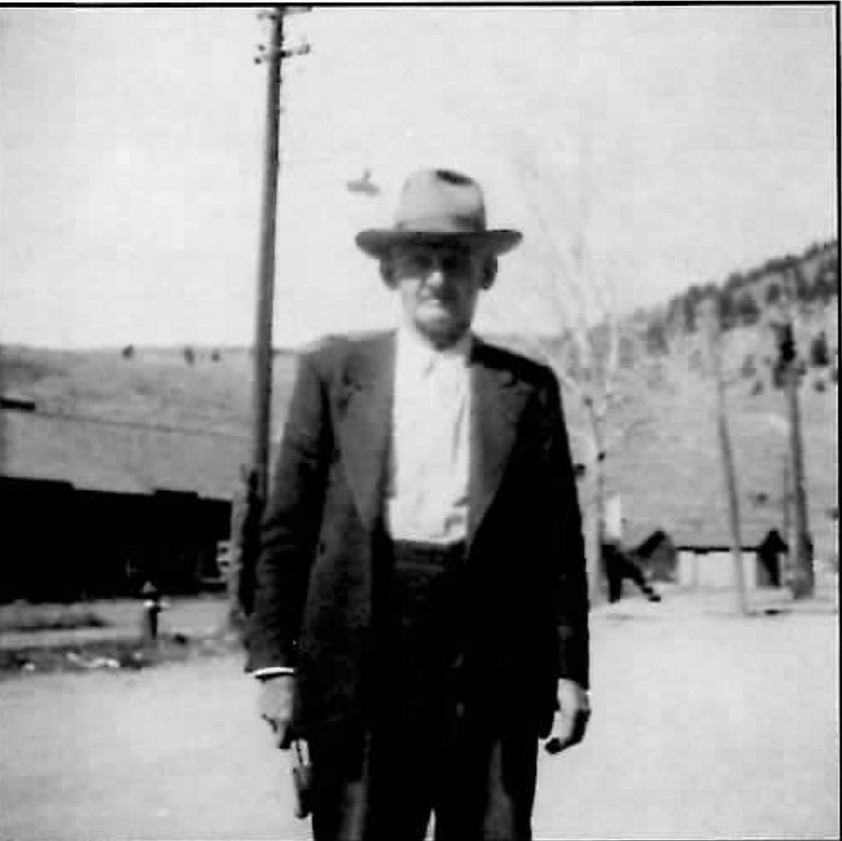
The author was born in Creede when it was a relatively young town though two boom and bust cycles, in mining, had prematurely aged both structures and citizens. The community was struggling in the 1920's. Eugene Groom, who had managed the Derrick Lumber Company, bought a Chevrolet truck and went into business for himself delivering hay, grain, flour and coal from the old Tabor warehouse. He also helped a couple of moonshiners stay afloat by investing in their wares. A. H. Major and W. S. Lewis ran grocery stores with credit extended to the most dependable patrons. Tomkin's Hardware Company provided all supplies needed in mining or building and had the franchise for Baldwin coal, brought in by railroad in gondolas and unloaded by square point shovels in coal sheds separating the bituminous product in nut, lump and blacksmith bins. Frank Swank and Bert Hosselkus had developed commercial fish hatcheries and were supplying eastern markets with mountain grown trout. Fred "Soapy" Birdsey and Robert Phillips handled two full time barber shops, Charles Webber ran "The Webber Mercantile Company," and from three to 12 miles surrounding Creede no less than five stills were in operation, two, of which, were well enough situated, and, combined with other ventures, to be year 'round enterprises.
In the sputtering mining business a stock issue had given the Equity Mine a transfusion under the direction of Hollister and Futterer. Clarence Withrow supervised exploration in the upper Commodore workings, Dean and Gish were driving for ore in the Bachelor Mine and Norman Alspaugh et al were removing silver ore from the Wabash stope in Sunnyside utilizing the Moon tunnel for access and haulage. Windy Gulch mineralized sediments were receiving the attention of Fred Monkemeyer and Charles Matson and much interest was being generated by a new firm, The Midwest Mining Company, which was driving tunnels in Nelson and Mammoth Mountains. Prospectors Noel Roberts and Jack Fleming were only a round away from bonanzas and Barney Oates, having replenished his energy in the warmth of Arizona, would return to his claims on West Willow Creek.
More and more ranchers were adding cabins for tourists as word spread of the number and size of trout in the Rio Grande. Antlers Park, Sowards, Workmans, Wrights, Officers, Wetherills and Wills ranches offered accommodations ranging from single cabins to doubles with cooking facilities. A good cabin with spring water and private biffy would command a princely sum of $5 daily while rentals in Creede ranged from $10 to $25 monthly.
The Denver and Rio Grande Railroad had a section crew keeping rails in order for the once weekly train boasting two coaches and a conductor. The section crew made a run a day before the train was due to clear the right of way of rocks along the steep grades. They came on a small, hand powered flatcar visible for at least a mile, by mesa residents, before churning up the tracks below lower mesa hill where tow-headed youngsters pelted them with rocks from shielding chokecherry bushes. The depot agent was compelled to have handwritten messages delivered to the parents of such heathens.
Putting enough food on the table during this period was a minor worry for most families. Frank and Pinky Bruns with sons, Dale and Emmett, ran a dairy near the junction of Sunnyside road and road 149 and offered home delivery. During winter Frank brought milk to town on a sleigh pulled by a fine team of horses. A runaway, as he was placing bottles of milk on the Snow and Jackson porches, scattered his profits nearly to Dan McGilvery's before the team tired in deep snow. Bill Jackson's heirs were blamed for spooking the horses but I can't remember if we were totally to blame.
Gardens were plentiful in the short growing season with Charles and Annie Cathcart taking honors for largest and most variety of vegetables. They also had Holstein cows and shared both milk and vegetables with neighbors. The Peppers, who farmed near Saguache, brought sacks of potatoes on their trips to Creede. Parts of deer and elk quarters hung in window coolers nearly year 'round. Fay Franklin, our Forest Ranger and Game Warden, never intruded as long as there was no waste of meat. Fay knew growing children needed protein and he was fairly sure he knew who was supplying it to those in need.
The townspeople were becoming car lovers and horse drawn transportation was fast disappearing from the scene. Two blacksmith shops were still repairing ore wagons and you could still get a horse shod at Mr. Keith's, a sprawling livery building and shop north of the telephone office. Arthur Fairchild had two teams and ore wagons in service and Bruce Manning transported goods with a Chevrolet truck. The clay mine, supervised by Engineer Ben A. Birdsey, used a sturdy truck to haul bentonite to a self loading tipple near Frank Powell's home.
The enterprises, with most return for the least investment, had to be the distilleries. The ones we became acquainted with were distributed around the perimeter of Snowshoe Mountain where the operators found a steady, clear water supply and the chances of a surprise raid were most remote. The competition was strong but I know of only one shooting feud. One of the moonshiners depended on a ditch for water that branched from a stream his rival used. Mr. Arlow plugged the ditch one day resulting in much rifle fire across a canyon by two expert marksmen. Bill Jackson, Undersheriff to Bill Orthen, had to intervene and arrested one of the pair. It proved to be a wise choice for his safety but the wrong choice for the fellow's wife. She battered Dad Bill royally with a handbag.
It was an oft told story when I was a youngster that a revenue agent came, unannounced, to Mineral County to count the distilleries. He became so lonely in his work that he fired a bullet into the very rear of his head rendering him instantly removed from the living. He was found by the bank of a creek where a rutted trail led wagon loads of cracked corn and sugar to a small shelter, surrounded by willows, further up the same creek. In this shelter a large funnel and copper coils precipitated vapors from mash tubs in a sterile and careful process. The body of the poor fellow was properly taken care of by Mr. Warren's mortuary and no other government agent was assigned to take inventory in Creede or Mineral county for many years.